चैटजीपीटी
पारंपरिक मंडला पोर्ट्रेट
यह चैटजीपीटी के लिए लिखा गया है। अलग मॉडल में परिणाम और रेफ़रेंस फ़ोटो का समर्थन अलग हो सकता है।
इस प्रॉम्प्ट का उपयोग करने से पहले
सूचीबद्ध टूल: चैटजीपीटी। पूर्ण निर्देश: 6,505 अक्षर। 1 आपूर्ति की गई उदाहरण छवि।
This prompt mentions reference images. Read its instructions for the required number of photos and identity constraints. We have not independently tested this prompt. Tool labels and supplied images are not a guarantee of compatibility or output quality.
पूरा प्रॉम्प्ट
Use the uploaded user photo as the **ONLY identity reference** for the human subject. Preserve the user's exact recognizable identity with maximum fidelity: facial structure, face shape, forehead, eyebrows, natural eye shape, nose, lips, mouth proportions, cheekbones, jawline, chin, skin tone, natural skin texture, hairline, hair texture, and all distinctive facial characteristics. Do not replace, beautify, redesign, slim, age, de-age, feminize, masculinize, or reinterpret the user's identity. The reference image controls everything except identity.
Recreate the reference as a highly detailed hand-painted digital portrait with a warm Indian/South Asian artistic aesthetic. Show the user's identity as the central seated subject, framed from approximately the upper thighs/waist upward, occupying most of the lower and middle portion of the vertical composition. The body is seated in a relaxed, slightly angled three-quarter orientation, with the torso leaning subtly toward one side. One arm rests naturally across the lower torso/lap, while the other arm and hands are positioned comfortably near the waist/lap area, creating the same folded, relaxed posture as the reference. Reproduce the reference's anatomy, shoulder position, arm placement, hand placement, and overall relaxed seated posture as closely as possible.
Match the reference head position precisely: the head is tilted subtly toward one shoulder and rotated slightly toward the viewer, creating an intimate three-quarter facial presentation. The neck remains naturally elongated and connected to the shoulders. The expression is calm, serious, introspective, and slightly melancholic, with a quiet emotionally distant mood rather than a smile. The lips are gently closed with a subtle natural fullness and relaxed tension. Eyebrows remain softly composed. The eyes are partially narrowed/relaxed and directed toward the camera/viewer with a slightly downward, contemplative quality. Do NOT copy the user's original expression, gaze, or head position; reconstruct the expression, gaze, and head pose from the reference while retaining only the user's identity.
Dress the subject in a traditional South Asian sari-inspired outfit matching the reference composition: a rich deep magenta/wine-red sari draped naturally across the shoulders and upper body, with painterly folds and subtle warm pink, crimson, orange, and burgundy variations. Include a darker red/maroon blouse underneath with a modest neckline. The sari has an ornate golden embroidered border with delicate traditional motifs. Preserve realistic fabric layering, folds, creases, draping, and weight. Do not allow clothing to alter the user's body identity or facial characteristics.
If compatible with the user's identity and appearance, reproduce the long, dark, loose hairstyle flowing over the shoulders and down the right side of the body, with soft natural waves and individual painted strands. If the user's hair differs, preserve the user's actual hair identity while adapting only its arrangement to approximately match the reference silhouette. Add the small centered decorative bindi visible on the forehead only if appropriate to the intended styling, while keeping the user's recognizable facial features unchanged.
Place the subject against a rich textured deep burgundy/red background resembling aged handmade paper or a painted Indian art poster. Behind the head, create a large symmetrical golden mandala/lotus halo occupying the central upper-middle background. The mandala consists of multiple concentric ornamental layers: fine golden geometric linework, paisley-like motifs, repeated pointed lotus petals, delicate floral patterns, circular rings, and intricate Indian ornamental detailing. Surround the outer circumference with evenly spaced stylized golden lotus flowers, forming a decorative halo directly behind the subject's head and shoulders. The mandala should remain clearly visible around the head without obscuring the face.
Use a limited warm palette dominated by deep burgundy, wine red, crimson, muted magenta, burnt orange, warm brown, and antique gold. The golden mandala and sari embroidery should have a slightly luminous but matte antique-gold appearance. Add subtle distressed paper texture, tiny imperfections, faded pigment variation, fine grain, faint scratches, and handmade print irregularities throughout the artwork, while keeping the subject highly detailed.
The rendering should look like premium hand-painted editorial illustration rather than a photograph: expressive brushwork, refined ink-like outlines, layered digital painting, realistic facial modeling, painterly skin shading, visible but controlled brush texture, delicate highlights, rich shadows, and sophisticated Indian folk-art influences. Keep the face especially detailed and recognizable, with natural facial anatomy and dimensional shading. Avoid cartoon exaggeration, anime features, plastic skin, excessive smoothing, or generic facial replacement.
Lighting is soft, warm, frontal-to-upper-front ambient illumination, with gentle highlights on the forehead, nose, cheeks, lips, neck, hands, and sari folds. Use subtle warm shadows beneath the chin, hair, arms, and clothing folds. No harsh studio lighting, no strong rim light, and no photographic lens blur; the entire illustration should retain consistent painterly detail.
Composition: vertical portrait, approximately **9:16 aspect ratio**, centered symmetrical mandala background with the subject slightly below center, head positioned directly over the mandala's inner focal point. Maintain the same visual hierarchy, proportions, negative space, cropping, and subject-to-background relationship as the reference. Keep the mandala extending toward the upper and side edges while the seated figure dominates the lower two-thirds. Preserve the reference's intimate, elegant, contemplative atmosphere.
Final result must unmistakably look like the **same person from the uploaded user photo**, while adopting the reference image's exact emotional expression, gaze direction, head tilt, body posture, clothing concept, composition, mandala environment, color palette, and artistic treatment. Identity preservation has absolute priority; reference identity must never override the user's identity. No text, typography, logos, watermark, extra people, modern objects, distorted hands, extra fingers, malformed anatomy, duplicated limbs, artificial facial features, or unrelated background elements.
पूरा प्रॉम्प्ट कॉपी करें और जहाँ कहा गया है अपनी रेफ़रेंस फ़ोटो लगाएं।
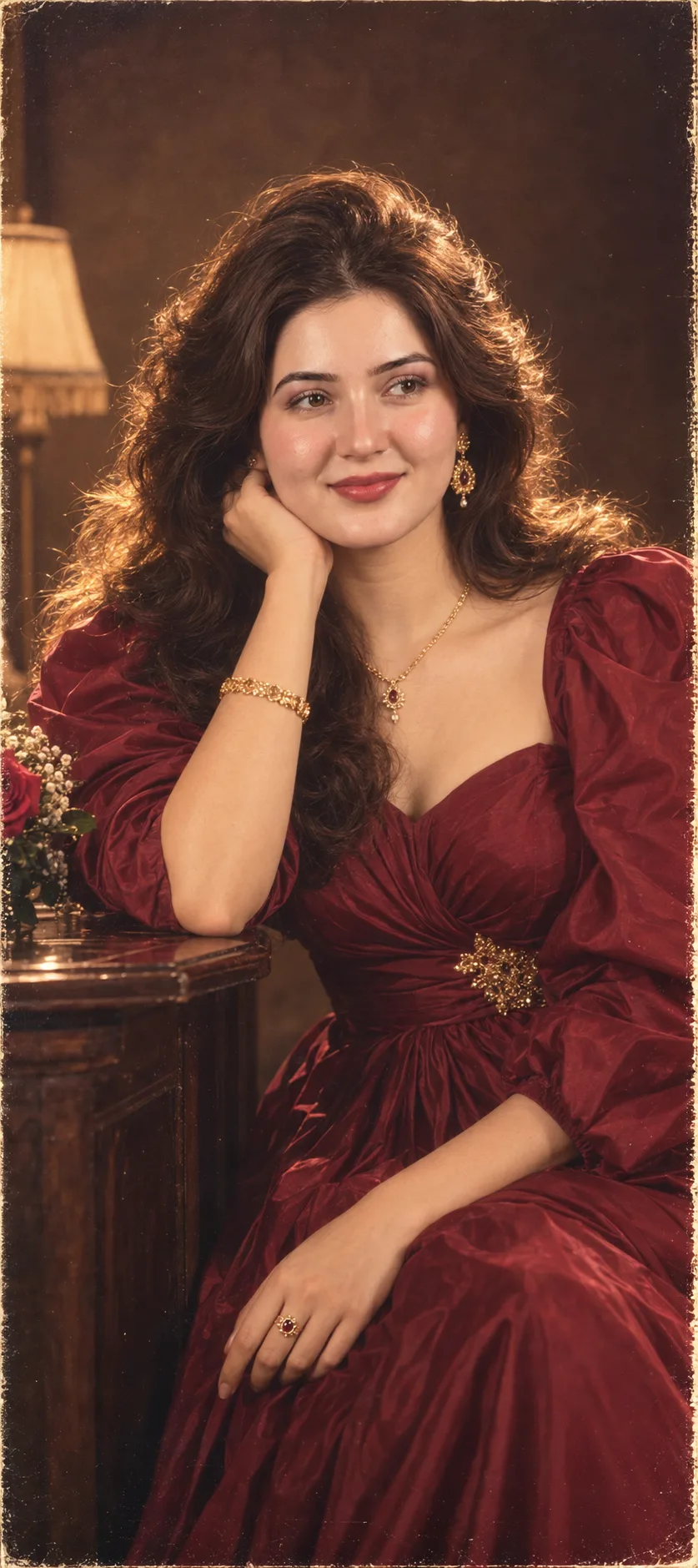
इस प्रॉम्प्ट के साथ दिया गया उदाहरण चित्र। हमारे साइट पर परीक्षण नहीं हुआ है।