चैटजीपीटी
1960 के दशक में उच्च-फैशन रंग पोर्ट्राइट
यह चैटजीपीटी के लिए लिखा गया है। अलग मॉडल में परिणाम और रेफ़रेंस फ़ोटो का समर्थन अलग हो सकता है।
इस प्रॉम्प्ट का उपयोग करने से पहले
सूचीबद्ध टूल: चैटजीपीटी। पूर्ण निर्देश: 5,457 अक्षर। 2 ने उदाहरण चित्र प्रदान किए।
यह तय करने के लिए पूरा पाठ पढ़ें कि आपके कार्य को संदर्भ फ़ोटो की आवश्यकता है या नहीं। We have not independently tested this prompt. Tool labels and supplied images are not a guarantee of compatibility or output quality.
पूरा प्रॉम्प्ट
AUTHENTIC 1960s HIGH-FASHION COLOR PORTRAIT

Create a breathtakingly authentic vintage fashion photograph of a highly fashionable young woman at the absolute height of 1960s fashion, photographed from the chest upward, ending around the lower chest.

HAIR — EXTREME PERIOD STYLING
Give her extremely voluminous, frizzy, teased 1960s hair arranged into a very high ponytail. The hair should be genuinely fluffy, coarse, slightly unruly and heavily backcombed, with loose frizzy strands around the crown and temples. Tie the high ponytail with an oversized, vividly colored vintage fabric ribbon/scrunchie made from textured synthetic material fashionable during the period. It should look deliberately extravagant and heavily styled, not like modern curly hair.

FASHION — COLORFUL PERIOD COUTURE
Dress her in an exceptionally fashionable late-1960s color-blocked dress with an unusual designer silhouette: sharply structured rounded neckline, fitted upper torso, dramatically shaped sleeves, and bold geometric panels across the chest.

Use a historically convincing palette of deep peacock blue, dark moss green, muted mustard yellow, wine red and aged ivory, arranged in large graphic blocks. The colors must look like authentic old textile dyes from the period — deep, slightly faded and chemically aged, never modern pastel, neon, candy colors, or contemporary fashion colors.

The fabric should have realistic vintage synthetic texture, subtle stiffness and authentic period tailoring, with small geometric decorative details and contrasting seams.

MAKEUP — EXTREMELY STYLED PERIOD MAKEUP
Give her unmistakably heavy 1960s makeup: dramatically thick black eyeliner extending outward into a strong graphic wing, exaggerated upper eyelashes, dark defined eyebrows, heavily powdered matte complexion, strongly shaped cheekbones, pale muted lipstick and carefully constructed eye shadow.

The makeup should visibly exaggerate and reshape the appearance of her features in the highly stylized beauty-fashion photography of the era. The skin should look powdered and matte, never glossy or modernly dewy.

EXPRESSION & POSE
She stands confidently like a vintage fashion model, looking directly into the camera with a composed, slightly mysterious expression. One hand rests naturally at her waist.

FRAMING
Very close portrait, from the top of the enormous hairstyle down to the lower chest. The face, makeup, hairstyle and upper garment dominate the photograph.

VERY OLD CAMERA — ESSENTIAL
Make it look as though this photograph was genuinely captured decades ago using a rare, primitive vintage consumer film camera from the 1960s, with imperfect optics and limited photographic resolution.

The image must have noticeable but beautiful optical softness and slight blurriness — not completely unreadable, but clearly softer than a modern photograph. Fine facial and fabric details should naturally lose some definition because of the old lens and film stock.

Include subtle focus imperfection, slight lens softness, low-resolution optical rendering, gentle motion softness, organic film grain, visible fine grain texture, softened edges, weak blacks, slightly washed contrast and tiny exposure irregularities.

AGED YELLOWISH FILM COLOR
Give the entire photograph a subtle warm yellowish aged-film cast, as though the original print has naturally yellowed with age.

The yellow tone must be gentle and believable, never strongly yellow or sepia. Preserve the deep peacock blue, moss green, mustard, wine red and ivory clothing colors underneath the aging, but make every color slightly faded, dusty and chemically aged.

The overall color should feel like an old photograph that has spent decades inside a family album — warm, slightly yellowed, faded and nostalgic.

RETRO FILM CHARACTER
Add authentic analog film grain and slightly uneven color reproduction. Include tiny variations in density, faint color fading, subtle film texture, mild halation around brighter areas and a delicate old photographic haze.

It should feel like a real physical photograph from the 1960s, not a modern digital photograph with a generic “vintage filter.”

PHYSICAL OLD-ALBUM CONDITION
Make the actual photograph physically aged: subtle paper wear, faded emulsion, tiny scratches, microscopic surface imperfections, slightly uneven exposure and irregular damaged edges.

Do NOT create a clean white rectangular border. The photographic edges should instead look naturally scraped, chipped, worn, faded, slightly torn and irregular, with tiny areas where aged off-white photographic paper shows through.

FINAL PRIORITY
The final image must look like a rare, authentic 1960s fashion photograph discovered inside an extremely old family album: extravagant colorful period fashion, enormous frizzy high ponytail, heavy graphic makeup, deep historical colors, subtle yellowed film aging, strong organic grain, and unmistakable old-camera softness and blur.

It must look photographed in the 1960s, not digitally recreated in the present.

NEGATIVE
No modern fashion, no modern makeup, no glossy skin, no sleek contemporary ponytail, no pastel palette, no neon colors, no sky blue, no modern digital sharpness, no DSLR clarity, no smartphone appearance, no clean white border, no contemporary accessories, no modern studio lighting, no Indian clothing, no plastic skin, no AI beauty smoothing, no excessive yellow tint, no heavy sepia effect, no completely unreadable blur.
पूरा प्रॉम्प्ट कॉपी करें और जहाँ कहा गया है अपनी रेफ़रेंस फ़ोटो लगाएं।
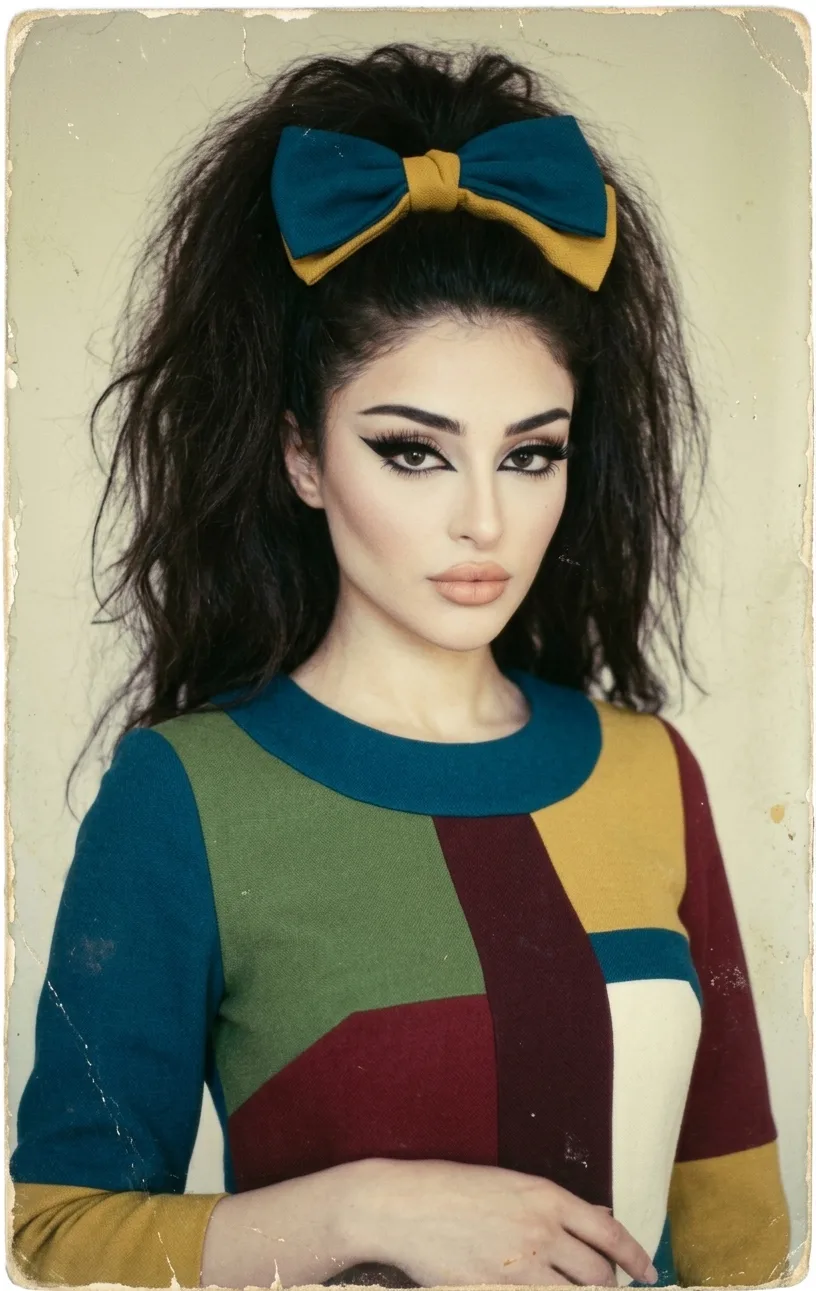
इस प्रॉम्प्ट के साथ दिया गया उदाहरण चित्र। हमारे साइट पर परीक्षण नहीं हुआ है।