ЧатGPT
Кинематографический бордовый модный портрет
Написано на ЧатGPT. Результаты и поддержка эталонных фотографий могут различаться в зависимости от модели.
Перед использованием промпта
Перечисленный инструмент: ЧатGPT. Полная инструкция: символы 6,700. 1 пример изображения.
This prompt mentions reference images. Read its instructions for the required number of photos and identity constraints. We have not independently tested this prompt. Tool labels and supplied images are not a guarantee of compatibility or output quality.
Полный промпт
Use the uploaded user photo as the **only source of identity**. Preserve that person’s exact recognizable identity and natural facial characteristics: facial structure, proportions, face shape, forehead, eyebrows, eyes, nose, lips, jawline, cheeks, chin, skin tone, skin texture, hairline, and distinctive features. Do not substitute, blend, beautify, masculinize, feminize, age, de-age, or reinterpret the identity. Do not make the subject resemble the person in the reference. The reference image controls everything except identity.
Recreate the reference as a cinematic vertical fashion portrait, maintaining the same overall composition and visual hierarchy. Show the subject seated on a simple black folding chair against a seamless, deep burgundy/red studio background. The subject occupies most of the frame, positioned slightly left of center, with the torso leaning diagonally backward and the lower body extending toward the lower-right portion of the image. Use a medium-full to three-quarter seated portrait framing, approximately 2:3 vertical aspect ratio (reference approximately 736×1104), with enough space above the head and visible portions of the chair and legs.
Match the reference body pose precisely: the subject is seated in a relaxed, dramatically reclined posture, upper torso angled backward while the hips remain planted in the chair. The shoulders are slightly uneven, with the upper body creating a strong diagonal from lower-left toward upper-right. One arm hangs naturally downward along the left side of the frame, relaxed and extended beside the chair; the opposite arm rests downward/outward near the right side of the body. Keep the hands relaxed rather than posed. The legs are positioned naturally in a seated stance, with the thighs extending toward the lower-right and the lower body partially cropped by the bottom edge. Preserve the characteristic relaxed, languid posture of the reference rather than making the pose upright or symmetrical.
Match the reference head position exactly: the head is tilted noticeably backward and slightly toward the subject’s left, with the chin raised and the neck elongated. The face is turned somewhat toward the upper-left/left side of the frame rather than squarely toward the camera. The subject’s eyes are closed or very nearly closed, with a calm, introspective, emotionally distant expression. Do not copy the source photo’s facial expression. Reconstruct the reference expression independently using the user’s identity: relaxed closed eyelids, softly settled eyebrows, relaxed cheeks, and gently closed lips with a subtle contemplative/serene mood. The gaze should therefore be directed upward/away from the camera through the closed or nearly closed eyes, conveying quiet confidence, contemplation, and controlled stillness. Do not add a smile.
Dress the user’s identity in the same general clothing configuration as the reference: a loose, crisp white/off-white long-sleeve button-up shirt with the collar open and several upper buttons undone, creating a relaxed fashion-editorial appearance. The shirt should drape naturally over the reclined torso with realistic folds and subtle tension around the waist, elbows, chest, and shoulders. Pair it with dark black trousers. Preserve the reference’s casual, slightly sensual styling while adapting all visible anatomy and proportions to the user’s actual identity. Do not copy tattoos, scars, body markings, or other identity-specific features from the reference person; only retain markings naturally belonging to the user.
Use a simple black metal folding chair with visible dark tubular frame elements beneath and beside the subject. Keep the chair understated and partially obscured by the body, but clearly recognizable in the lower-left and lower-middle areas. No additional furniture, props, scenery, architecture, or decorative objects.
Lighting is a major part of the recreation: use dramatic low-key studio lighting dominated by saturated deep red/burgundy illumination. The background should be an almost uniform dark crimson gradient, becoming darker toward the edges. Illuminate the subject primarily with a soft directional red/orange light from the front-left/upper-left, producing warm red highlights across the face, neck, white shirt, and exposed skin while allowing substantial areas of shadow. Add subtle darker red shadowing along the right side of the body and beneath the chin. The white shirt should remain visibly white/off-white beneath the red illumination, with realistic pinkish-red highlights and deep burgundy shadows. Maintain strong tonal separation between the pale shirt and dark trousers/background.
Use realistic photographic rendering with a premium fashion-editorial aesthetic: cinematic, moody, sensual but non-explicit, sophisticated, high contrast, rich blacks, controlled highlights, realistic skin texture, natural anatomy, realistic fabric texture, and subtle filmic tonal rolloff. The background should be slightly softer than the subject while the subject remains sharply rendered. Use shallow-to-moderate depth of field, approximately a 50–70mm full-frame equivalent perspective, avoiding wide-angle distortion. Camera positioned around chest/waist height and slightly in front of the seated subject, with a subtle low-angle impression caused by the reclined posture. Preserve natural proportions and realistic perspective.
Composition must closely match the reference: head in the upper-left quadrant, torso dominating the central area, white shirt forming the brightest major shape, black trousers occupying the lower-right region, one arm descending toward the lower-left, and chair structure visible underneath. Keep the dramatic diagonal created by the reclining body and raised head. Crop the lower legs naturally as in the reference. Avoid centering the face, straightening the body, changing the camera to eye level, or converting the image into a conventional headshot.
Final result: an unmistakably recognizable version of the person from the uploaded user photo, placed into the exact visual scenario of the reference—same seated reclining posture, raised/tilted head, closed-eye contemplative expression, upward/away gaze, clothing concept, red studio environment, chair, framing, perspective, shadows, cinematic lighting, color palette, and fashion-editorial atmosphere—while **never borrowing the reference person’s identity or facial features**. No text, logos, signatures, watermark, extra people, jewelry unless naturally present in the user photo, exaggerated muscles, altered anatomy, facial reconstruction, identity drift, smile, direct eye contact, bright neutral background, or additional props.
Скопируйте полное приглашение и используйте свои собственные эталонные фотографии там, где это необходимо.
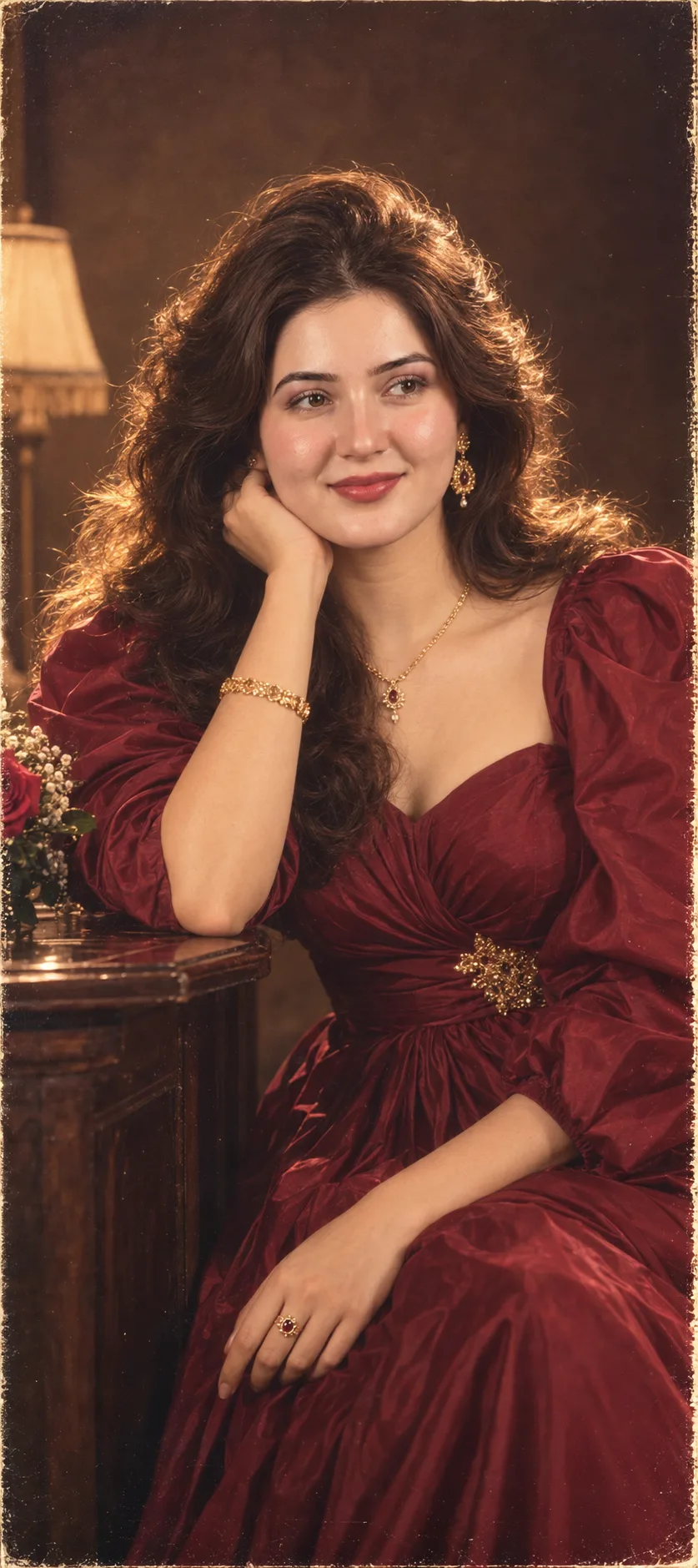
Пример изображения, предоставленного вместе с этим приглашением. Эта подсказка не проверялась нашим сайтом.