雙子座
1890 工作室肖像
為雙子座 編寫。不同型號的結果和參考照片支援可能有所不同。
使用提示詞前
列出的工具:雙子座。完整說明:3,246 個字元。 2 提供範例影像。
This prompt mentions reference images. Read its instructions for the required number of photos and identity constraints. We have not independently tested this prompt. Tool labels and supplied images are not a guarantee of compatibility or output quality.
完整提示詞
Use the uploaded face photo strictly as the identity reference. Preserve the subject’s exact facial identity, facial structure, natural skin tone, age, proportions, and recognizable features without modernizing or beautifying the face. Reimagine the subject as an 18–22-year-old young woman photographed in a professional portrait studio around 1890.
She wears an authentic late-19th-century handwoven Indian saree, made from slightly textured cotton or fine silk in a deep muted rust-red, earthy maroon, or faded brick tone, with a narrow traditional woven border and no modern printed patterns. The saree is draped modestly and traditionally around the body, with the pallu brought over the shoulder and arranged neatly across the upper torso, creating the structured, graceful silhouette typical of the period. A simple fitted blouse is partially visible beneath the drape. Add understated traditional jewelry: small antique-gold earrings, a simple necklace, a few thin bangles, and a very subtle traditional hair ornament.
Her hair is naturally dark, thick, and neatly arranged in a period-appropriate center-parted style, gathered into a low bun at the back with a few natural strands rather than modern styling. Her beauty is understated: clean natural skin, softly defined eyes with extremely subtle traditional kohl, naturally shaped brows, and muted natural lips—no modern foundation, contouring, glossy lipstick, false lashes, or heavy makeup. Her expression is calm, dignified, slightly serious, and quietly beautiful, with the composed presence expected in a formal portrait of that period.
Place her inside an authentic 1890 photographic studio, with a simple painted backdrop, plain wooden studio chair, subtle drapery, and restrained period furnishings. She sits or stands very still in a formal portrait pose, shoulders relaxed, hands arranged naturally and modestly, looking directly toward the camera with a quiet, self-possessed expression. The composition should feel like a carefully posed portrait rather than a modern fashion photograph.
Most importantly, recreate the physical character of an actual late-19th-century studio photograph: early photographic plate/albumen-print appearance, monochromatic warm sepia-brown tones, low contrast, soft focus, limited tonal range, slightly uneven exposure, delicate chemical fading, subtle photographic grain, tiny dust marks, faint scratches, worn corners, small edge abrasions, and the texture of an old photograph mounted or printed on thick aged paper. Add a naturally imperfect faded cream/off-white paper border, slight discoloration around the edges, and very subtle age marks. The image should feel like a real photograph discovered inside an old family album, not a modern digital image with a vintage filter.
Use soft diffused studio illumination appropriate to early photography, with gentle shadows and no modern cinematic lighting. Keep the entire image historically restrained, quiet, intimate, and believable, as though this exact portrait was genuinely photographed around 1890 and preserved on paper for more than a century. Avoid modern objects, modern fabrics, modern makeup, contemporary jewelry, digital sharpness, HDR, glossy skin, or modern fashion styling.
複製完整的提示並根據要求使用您自己的參考照片。
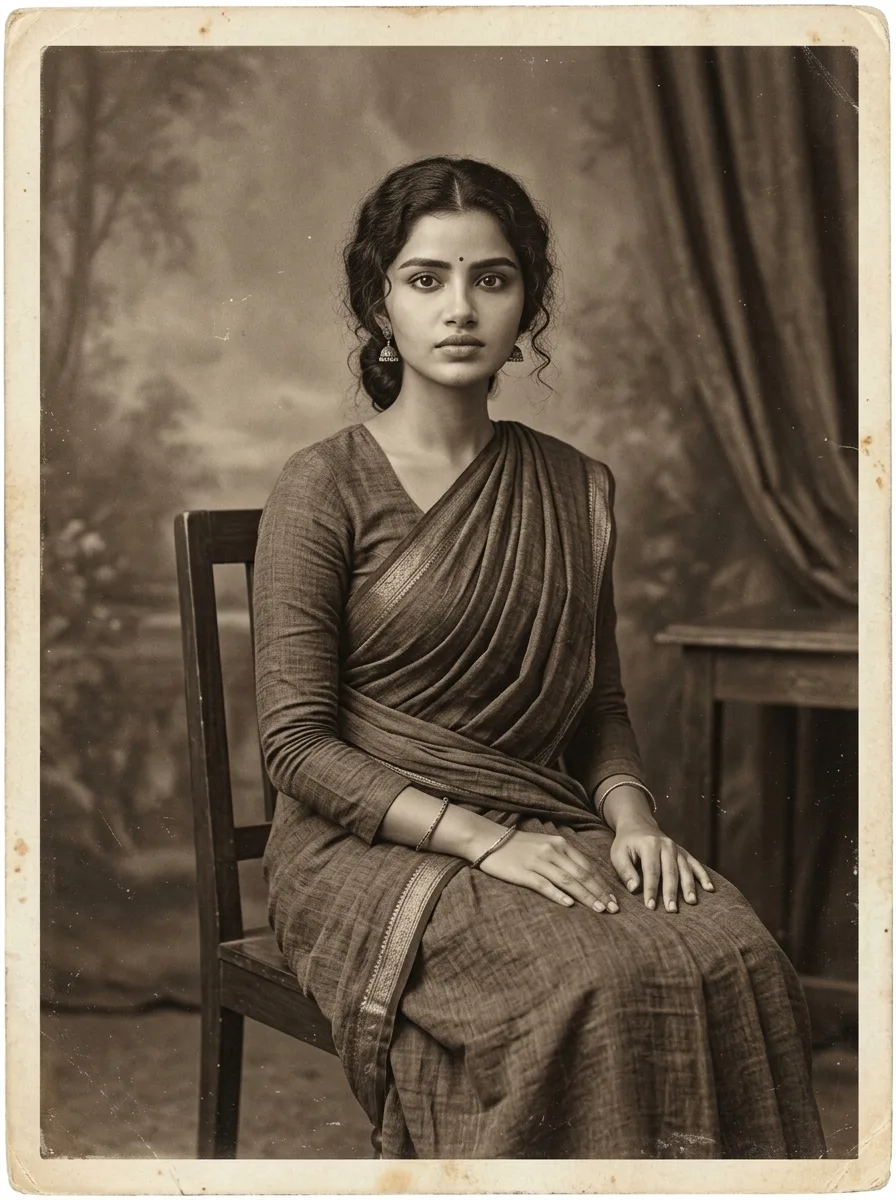
此提示提供的範例影像。此提示尚未經過我們網站的測試。