ChatGPT
Taj Mahal Heritage Portrait
Written for ChatGPT. Results and reference-photo support may differ across models.
The complete prompt
Use the uploaded image as the PRIMARY VISUAL REFERENCE and recreate the image as closely as possible. Create a highly realistic full-body travel portrait of a young Indian man walking casually along the central pathway in front of the Taj Mahal in Agra, India.

Match the reference image very closely in pose, body positioning, camera angle, framing, composition, clothing, hairstyle, environment, architecture, lighting, colour combination, perspective, mood and overall photographic aesthetic.

Create a vertical portrait composition with the Taj Mahal dominating the entire background, perfectly recognisable and centred behind the subject. The subject should appear relatively small within the large architectural setting, matching the scale and visual relationship shown in the reference.

The subject is walking naturally toward the right side of the frame, captured mid-stride. His torso remains mostly upright, with his head turned slightly toward the camera/front-left, creating a natural candid travel photograph. One leg is extended forward while the other crosses slightly behind, exactly matching the relaxed walking movement of the reference. Both arms hang naturally at his sides, with a subtle bend at the elbows and relaxed hands.

Subject height: 6 feet (183 cm), with realistic natural body proportions.

If a separate face reference is provided, use ONLY the facial identity from that uploaded face image. Preserve the exact recognisable facial structure, skin tone, facial proportions, eyes, nose, lips, jawline and other defining facial characteristics. Do not copy the face identity of the person in the main reference image. Naturally reconstruct and integrate the face with the head, hair, ears, neck and body so the final image looks like one real person naturally photographed in this location, never like a pasted face or simple face swap.

Use the same hairstyle shown in the reference image. Preserve the hairstyle's shape, length, volume, texture and direction, with naturally styled dark hair that sits close to the head and has subtle natural volume. The hair must connect naturally to the forehead, ears and neck.

Recreate the clothing closely: a dark navy-blue traditional Indian kurta, approximately knee-length, with a simple stand collar, long sleeves and a clean minimalist design. Preserve the relaxed straight silhouette, button/placket detailing and subtle natural fabric folds.

Pair the kurta with matching loose dark navy-blue or deep charcoal traditional trousers/pajama, maintaining the relaxed traditional silhouette and natural fabric draping around the legs.

The subject wears simple black traditional open-toe sandals, with realistic straps and natural foot positioning. Ensure both feet are correctly connected to the legs and accurately positioned during the walking stride.

Keep the outfit understated and elegant, with no unnecessary embroidery, patterns or decorative elements.

Recreate the Taj Mahal extremely closely as the architectural focal point. Place the enormous white-marble monument directly behind the subject, with its central onion-shaped dome, finial, four surrounding minarets, smaller domed chhatris, symmetrical façade, large central arched entrance and intricate marble detailing all clearly visible.

Preserve the Taj Mahal's characteristic white and pale ivory marble appearance, delicate ornamental patterns, recessed arches, geometric detailing and symmetrical Mughal architecture.

The central dome should rise dramatically behind the subject and occupy much of the upper half of the frame. Maintain the correct architectural proportions and symmetry.

The subject stands on the broad stone-paved central pathway leading toward the Taj Mahal. Recreate the warm pale pinkish-beige sandstone paving with realistic individual slab divisions and subtle surface variation.

Include the manicured Mughal-style gardens on both sides of the pathway. Recreate neatly trimmed dark-green conical/cylindrical shrubs and hedges, spaced symmetrically along the walkway.

Maintain the open central perspective of the reference, with the pathway creating strong leading lines toward the monument.

Use soft, slightly warm daylight under a pale hazy sky. The atmosphere should resemble a calm early morning or late afternoon visit, with gentle diffused sunlight rather than harsh shadows.

Preserve the reference's muted, slightly pastel colour palette of ivory-white marble, dusty beige stone, muted green foliage, navy-blue clothing and a pale warm-grey sky.

Use a realistic travel-photography perspective with a moderate telephoto feel, keeping both the subject and Taj Mahal sufficiently detailed. The monument should remain recognisable and naturally sharp without making the image look digitally composited.

Maintain realistic architectural scale and perspective. The Taj Mahal must look physically present behind the subject, with correct depth, shadows, atmospheric perspective and natural interaction between the subject and environment.

Preserve realistic skin texture, individual hair strands, kurta fabric, trouser folds, sandal construction, stone paving, trimmed foliage, marble texture and architectural ornamentation.

The final image should look like a genuine high-quality travel photograph taken at the Taj Mahal, understated, elegant, culturally authentic and naturally composed.

Do not reproduce any visible watermark, photographer credit, social-media text or other unwanted text from the reference.

Image dimension: 1122 × 1402 px.

Negative instructions: no pasted-face appearance, no face-swap artifacts, no cut-out face, no overlay effect, no mismatched skin tone, no mismatched lighting, no incorrect identity, no incorrect hairstyle, no altered facial proportions, no distorted anatomy, no extra fingers, no malformed hands, no duplicated limbs, no extra arms or legs, no unnatural joints, no incorrect walking pose, no floating feet, no distorted sandals, no warped kurta, no incorrect clothing proportions, no artificial fabric, no distorted Taj Mahal, no incorrect dome, no missing minarets, no asymmetrical architecture, no warped arches, no duplicated architectural elements, no distorted marble patterns, no unrealistic gardens, no excessive greenery, no plastic skin, no waxy skin, no excessive skin smoothing, no CGI appearance, no excessive HDR, no oversaturated colours, no dramatic artificial lighting, no incorrect perspective, no random tourists, no vehicles, no unwanted text, no watermark, no photographer credit, no logos, no obvious AI artifacts.
Copy the complete prompt and use your own reference photos where requested.
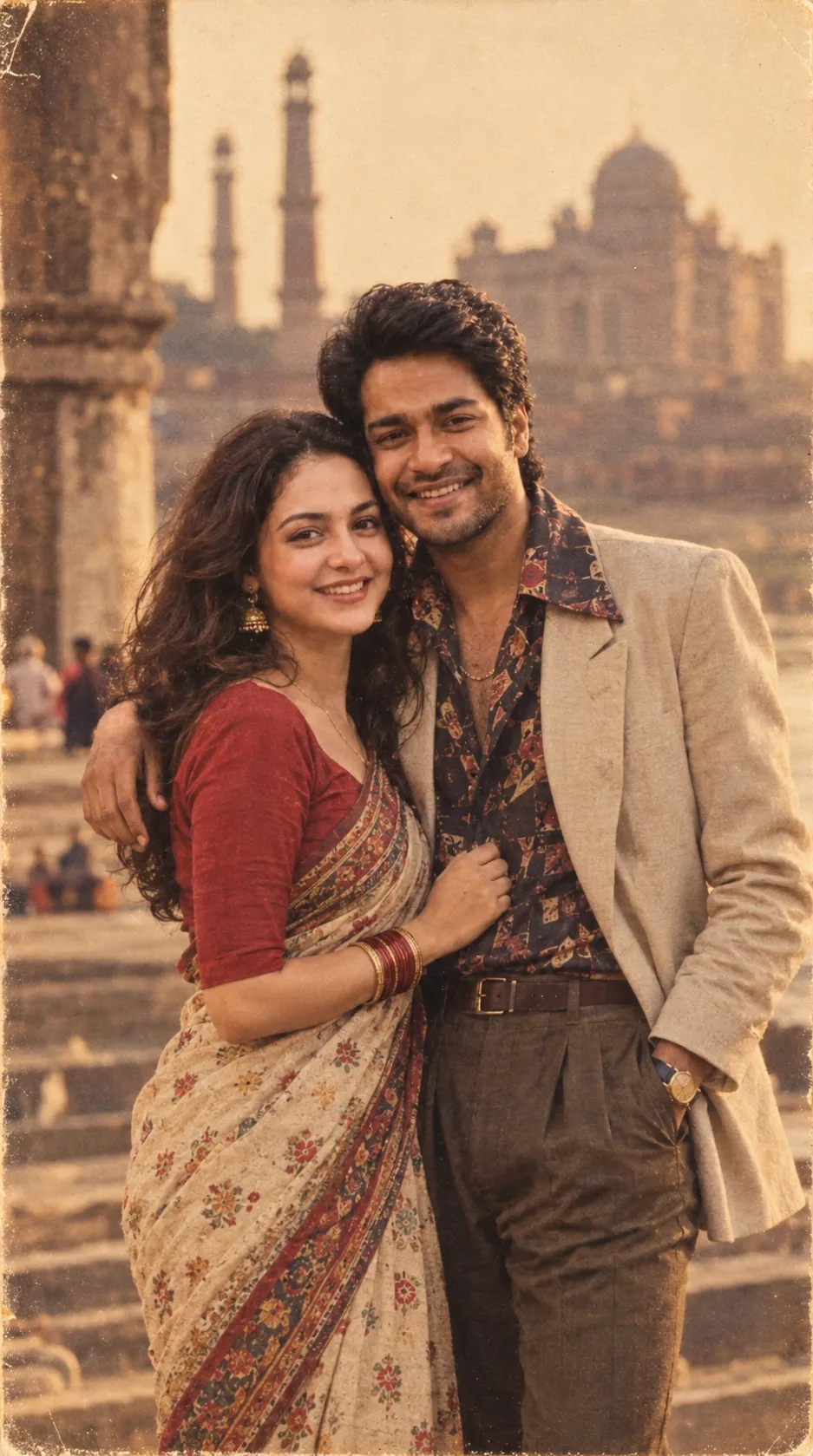
Example image provided with this prompt. This prompt has not been tested by our site.