ChatGPT
"Janmashtami Gokul Bhandara — Serving with Devotion"
Written for ChatGPT. Results and reference-photo support may differ across models.
The complete prompt
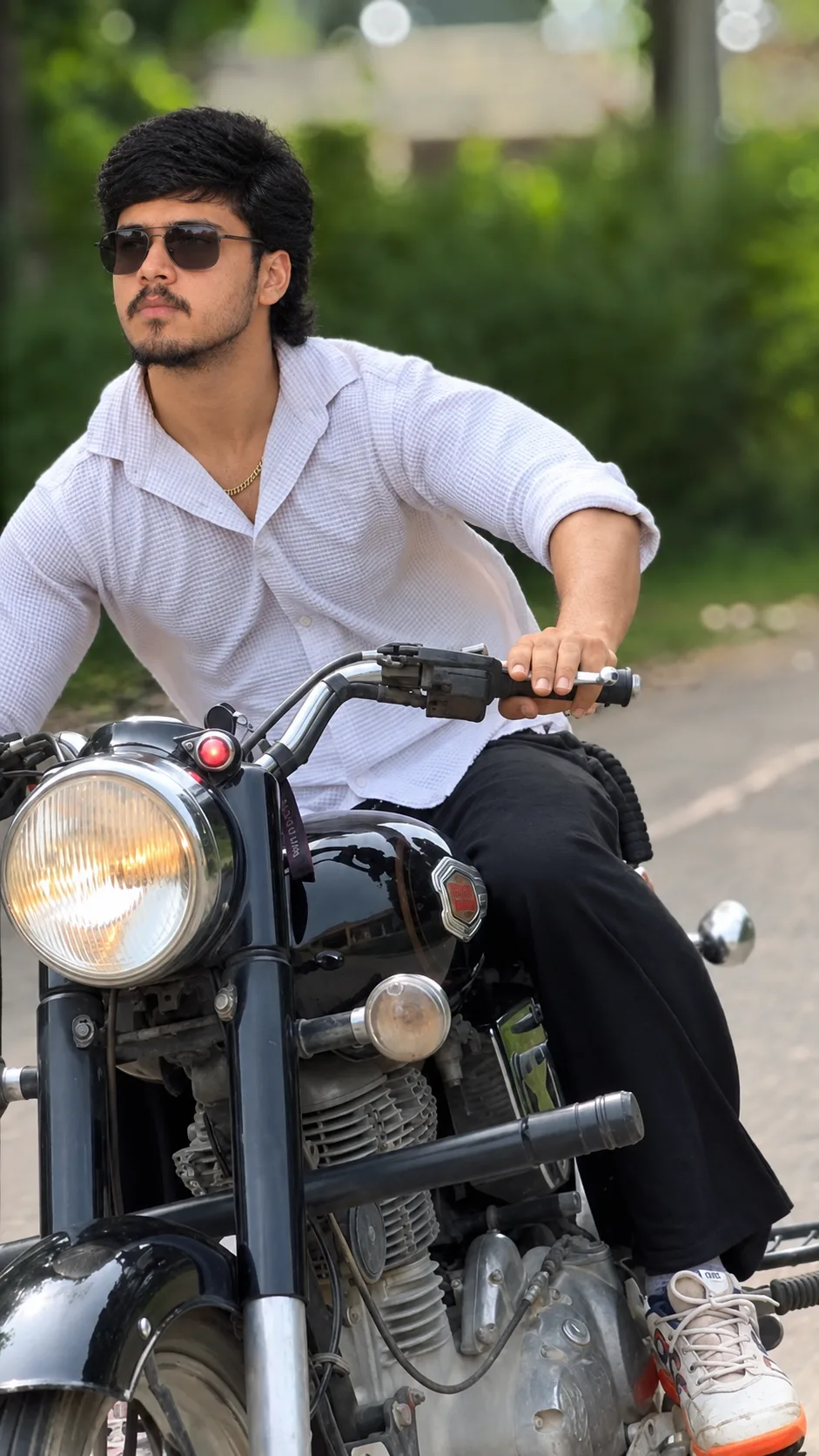
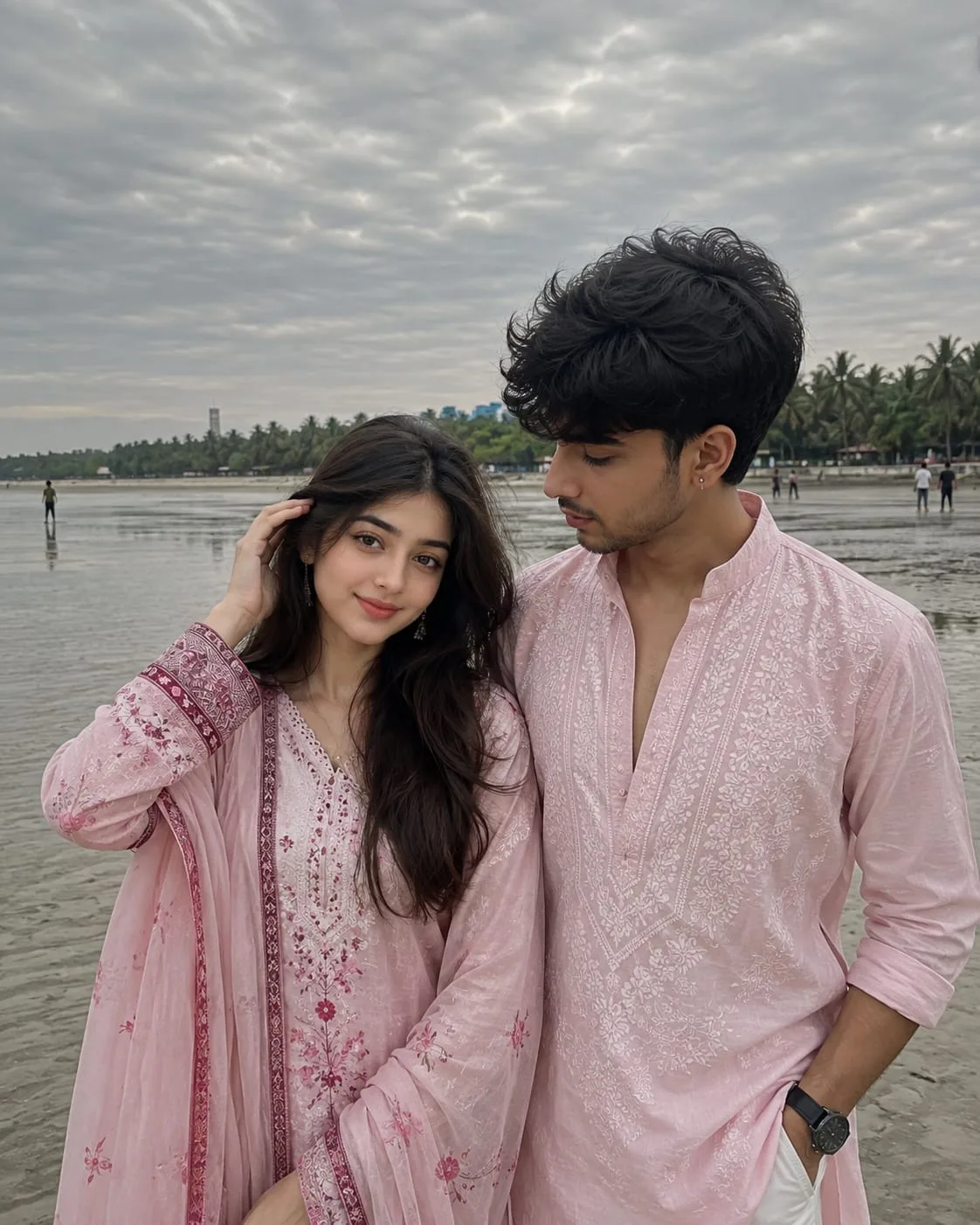
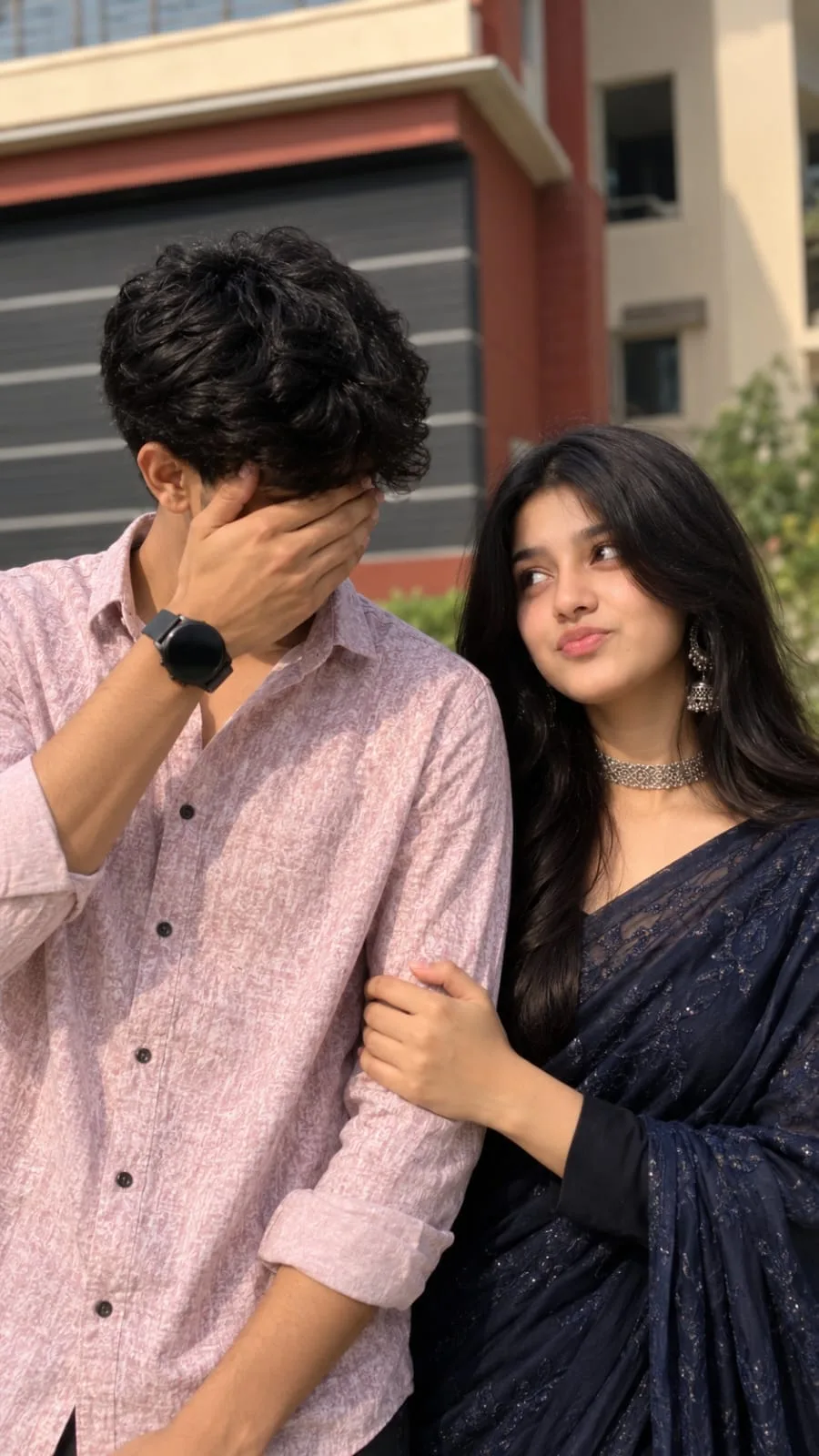
IDENTITY LOCK: Do not change either subject's (the couple's) facial
bone structure, eye shape and color, nose shape, lip shape, jawline,
or skin tone in any way — keep both 100% identical to the original
uploaded photo. Body build and proportions unchanged for both
individuals. Non-negotiable.

CHARACTER IDENTITY SEPARATION (critical): There are exactly two
distinct identity groups in this image and they must never mix or
swap:
Group 1 — the real couple from the uploaded photo, appearing ONLY as
the two people serving food. Their faces must not appear anywhere
else in the image.
Group 2 — the Gokul villagers (bhandara guests), rendered as separate,
distinct figures of varying ages (elders, children, families) in
traditional festive attire, each with their own unique face —
completely different from the couple's faces and from each other. Do
not blend, morph, or repeat the same face across multiple villagers.

SCENE CONCEPT: A joyful Janmashtami community feast (bhandara) in the
village of Gokul, celebrating Kanha ji's birth. Rows of Gokul
residents — men, women, elders, and children — sit cross-legged on
the ground on either side of a long traditional feast line, banana
leaves or brass thalis laid out in front of each person, filled with
an array of traditional prasad dishes (kheer, poha, makhan-mishri,
puris, seasonal sabzi, laddoos). A small decorated Krishna idol or
temporary shrine sits at the head of the feast line, blessing the
gathering, softly lit with diyas.

COUPLE'S ROLE & POSE: The real couple walks along the feast line
together serving food with devotion and joy — one partner holding a
large brass vessel of kheer or curd and gently serving it into a
villager's thali with a ladle, natural wrist angle and controlled
pour; the other partner walks just behind or beside, holding a stack
of puris or a basket of laddoos, placing one onto a thali with a
natural pinching hand gesture. Their bodies angled naturally forward
and slightly bent while serving, weight shifted onto one leg each as
real people do while leaning down to serve, one partner glancing at
the other with a warm smile.

EXPRESSION: Both partners show joyful warmth and humility — genuine
smiles with softly crinkled eyes, focused gently on the task of
serving rather than posing at the camera; villagers being served show
grateful, content expressions, some mid-conversation, some children
reaching eagerly for food.

ANATOMY ACCURACY (critical, check before finalizing): Every person in
the scene — the couple and every villager — must have exactly two
arms, two hands, and exactly five fingers per hand, with no fused,
missing, extra, or elongated fingers. Every person must have exactly
two legs, correctly folded or positioned at natural joints, with no
extra or merged limbs. Hands holding serving vessels, ladles, or food
items must show natural, anatomically correct grip. Re-verify hand,
finger, and leg count and structure for every figure in the image,
including background villagers, before finalizing.

LIGHTING SETUP (as a real photographer would dial it in): Key light —
warm late-afternoon or early-evening sun, acting as a soft golden key
from camera-left, low angle, typical of an outdoor courtyard feast.
Fill — soft bounced light from the light-colored ground and banana
leaves, gently lifting shadows under faces. Rim light — diyas and
hanging string lights near the Krishna shrine create a warm glow
along the couple's hair and shoulders as they move through the feast
line. Catchlights in the couple's eyes should be warm and soft.

LENS & OPTICS: Simulate a 35mm lens at f/4 to comfortably capture the
long feast line, multiple villagers, and the couple in one wide,
balanced frame — moderate depth of field keeping the couple and
nearby villagers sharp while the far end of the feast line softly
falls off into gentle background blur, faint natural vignette at the
corners.

FILM/COLOR SCIENCE: Warm festive film response — golden-hour
highlights bloom softly rather than clipping, shadows lifted gently
rather than crushed black, rich warm gold-green-earthy palette
(banana leaves, brass vessels, festive fabric), skin tones of the
couple and villagers staying natural and true against the warm light.

SET DETAILING (peak detail): Long rows of banana leaves or brass
thalis with visibly distinct traditional dishes, brass and copper
serving vessels with fine engraved patterns, small clay diyas placed
along the feast line, marigold flower petals scattered on the ground,
a simple decorated mandap or shrine with the Krishna idol adorned in
peacock feathers and garlands, earthen pots (matkas) stacked nearby,
rustic courtyard textures like a mud-plastered wall or tulsi plant in
the background, gentle wisps of steam rising from hot dishes.

RETOUCH PIPELINE: Frequency-separation-style retouching on the couple
— smooth tonal transitions on skin while fully preserving fine pore-
level texture and natural color variation under the warm golden-hour
lighting. Subtle dodge-and-burn to retain natural facial planes for
both subjects, no flattened or plastic-looking skin.

FINISHING: Fine film grain overlay at low opacity, soft warm cinematic
color grading, no digital sharpening halos, naturally balanced wide
composition with the feast line leading the eye toward the Krishna
shrine in the distance.

FINAL CHECK: Ensure zero facial distortion for the couple, correct
anatomically accurate hands and legs for every figure including
background villagers (no extra or missing digits/limbs), no identity
mixing or repeated faces among villagers, and consistent shadow/light-
source logic matching the golden-hour outdoor setting.
Copy the complete prompt and use your own reference photos where requested.
Example image provided with this prompt. This prompt has not been tested by our site.