ChatGPT
Moving train window photo
Written for ChatGPT. Results and reference-photo support may differ across models.
The complete prompt
Create a breathtaking ultra-photorealistic 9:16 vertical photograph using the uploaded photograph as the EXACT identity reference. Preserve the subject’s exact facial identity, facial proportions, eyes, nose, lips, skin tone, natural asymmetry, and recognizable features.

CONCEPT

An authentic mid-1960s Paris photograph taken from inside a slowly moving old train, with the subject visible through the train window on the platform. It feels like someone quickly raised a very old camera and captured the subject for only a fraction of a second before the train moved away.

The photograph should feel accidental, emotional, nostalgic, and almost imperfectly remembered.

SUBJECT

The subject stands naturally on an old Paris railway platform, looking slightly toward the camera rather than posing. Their expression is subtle and genuine — quiet, thoughtful, slightly surprised, as though they did not expect to be photographed.

Authentic 1960s European clothing: simple structured coat, high-neck sweater or collared shirt, tailored trousers or period-appropriate skirt, understated leather shoes. No modern fashion.

COMPOSITION

A close-to-medium environmental photograph. The subject is clearly recognizable but not perfectly sharp. Part of the old train window frame appears in the foreground, creating the feeling that the photograph was captured from inside the moving train.

The background contains softly blurred period-correct Paris railway details, old signage, platform structures, and distant people.

VERY OLD CAMERA — IMPORTANT

Make this look like it was captured with a very old, inexpensive 1960s film camera, not a modern camera.

The image must be noticeably blurry and soft overall.

Use strong natural optical softness, imperfect focus, low resolving power, slight camera shake, subtle motion blur from the moving train, soft edges, weak fine detail, mild exposure inconsistency, and visible but organic old film grain.

The face must remain recognizable, but do not make the eyes, skin, clothing, or background digitally crisp.

There should be a gentle haze and softness across the entire photograph, like an old camera simply could not capture modern-level detail.

Do NOT create artificial Gaussian blur or a digitally blurred face. The softness must look like it naturally came from the old lens, film, focus, movement, and aging of the physical photograph.

COLOR

Extremely old faded film colors: washed-out reds, dusty blue, muted cream, faded brown, slightly yellowed highlights, soft blacks, low contrast, reduced saturation, uneven fading, and subtle color shifts.

No modern vibrant colors. No HDR. No teal-orange cinematic grading.

PHYSICAL PHOTOGRAPH

The image must look like a real physical photograph that was printed decades ago and kept inside an old album.

The outer photographic paper must have irregular damaged edges — scraped areas, torn fibers, chipped sections, tiny cracks, faded emulsion, worn corners, and small areas where the print has physically deteriorated.

The damage must be uneven and organic.

ABSOLUTELY NO straight white border, clean rectangular frame, perfect outline, or digitally added photo-frame effect.

Some faded or damaged areas can slightly eat into the photograph itself, making the print feel genuinely old and handled.

FINAL FEEL

The final result should be slightly blurry, faded, imperfect, low-detail, and beautifully nostalgic — like a photograph from the 1960s that has survived for decades.

It should have that special feeling of an old memory where you can recognize the person and moment clearly, but the photograph itself is no longer perfectly clear.

NEGATIVE INSTRUCTIONS

No modern camera sharpness, no DSLR clarity, no smartphone photography, no ultra-sharp eyes, no HDR, no artificial digital blur, no excessive fake grain, no plastic skin, no modern color grading, no glossy finish, no contemporary clothing, no modern vehicles, no modern architecture, no clean white border, no straight border, no perfect rectangular frame, no CGI, no illustration, no AI-looking details.

FINAL PRIORITY: Make the photograph feel genuinely OLD — captured by a primitive 1960s camera, naturally blurry and imperfect, physically aged on paper, yet still emotionally beautiful and recognizable.
Copy the complete prompt and use your own reference photos where requested.
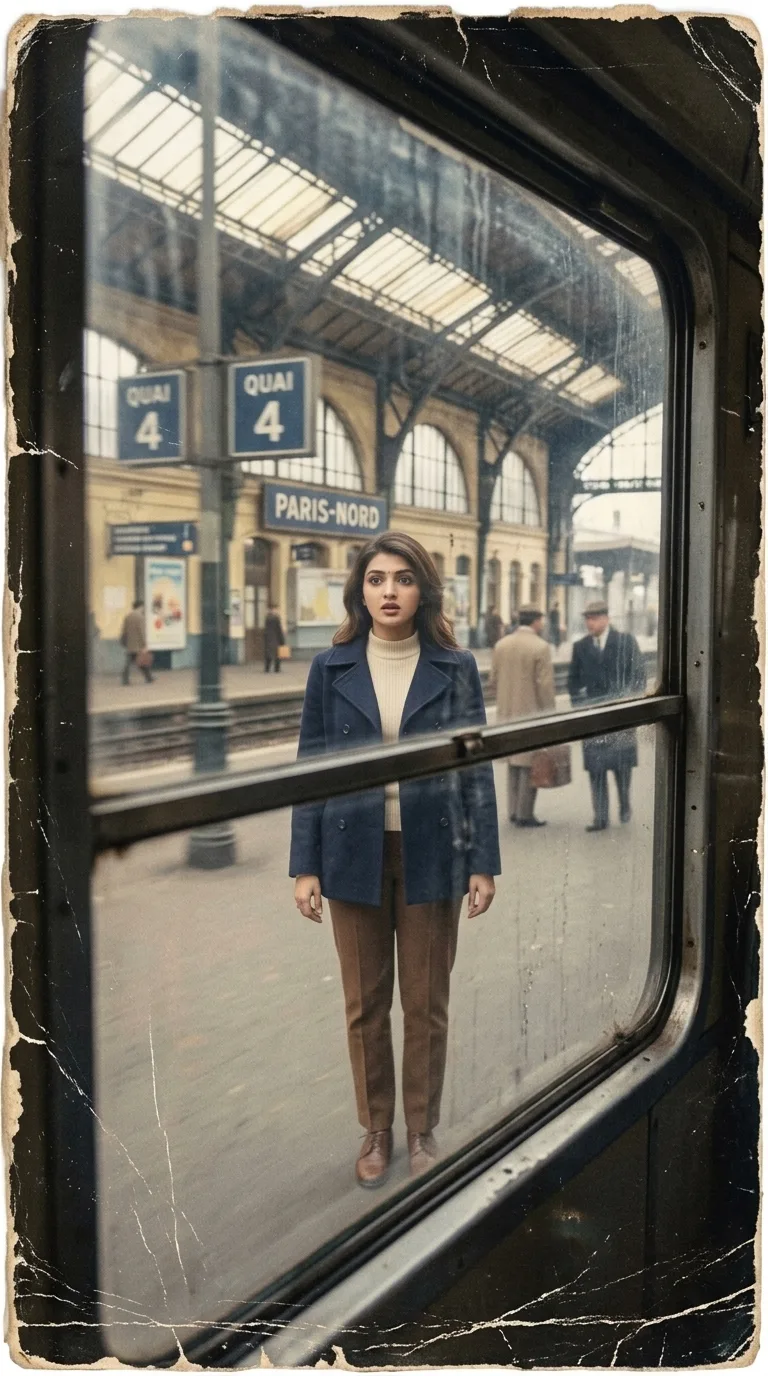
Example image provided with this prompt. This prompt has not been tested by our site.