ChatGPT
Vaastav
Written for ChatGPT. Results and reference-photo support may differ across models.
The complete prompt
Use my uploaded photograph as the PRIMARY IDENTITY REFERENCE for the male subject, and use the provided reference image as the PRIMARY VISUAL / COMPOSITION / STYLE BLUEPRINT.

Recreate the reference image as a premium cinematic Indian crime-drama movie poster, while replacing the original protagonist with the person from my uploaded photo.

IDENTITY PRESERVATION — ABSOLUTE PRIORITY:
Preserve the uploaded person's exact recognizable identity. Accurately retain the facial structure, face shape, forehead, eyebrows, eyes, eye spacing, nose, lips, cheek structure, jawline, chin, ears, natural skin texture, hairline and overall facial proportions. Do not replace the face with another person. Do not create a generic Bollywood actor. The final subject must unmistakably look like the person in my uploaded photograph.

Integrate the face naturally into the head and body. The face must NOT look pasted, cut out, digitally composited, or face-swapped. Match skin texture, lighting direction, shadows, color temperature, sharpness and photographic grain between the face and the rest of the body.

COMPOSITION:
Create a vertically framed cinematic Indian movie-poster composition closely inspired by the reference.

Place the male subject exactly in the visual center of the frame, occupying the middle and lower-middle portion of the poster.

Show him seated cross-legged on the floor in a confident, relaxed but intimidating pose. Both knees extend outward naturally. Both hands rest near the knees / thighs with a strong grounded posture. His torso faces directly toward the camera. His head remains centered with a serious, composed, commanding expression.

Use a slightly low-to-eye-level cinematic camera perspective that gives the subject presence and authority without making the anatomy exaggerated.

Maintain symmetrical visual balance:
large title at the top,
subject centered underneath,
deep red atmospheric background surrounding the figure,
ample negative space around the central character.

WARDROBE:
Dress the subject in a luxurious traditional Indian white outfit inspired by the reference:
a loose white kurta / open-front traditional shirt with relaxed sleeves,
white traditional trousers or dhoti-style lower garment,
slightly open neckline,
subtle layered gold chains around the neck,
small traditional accessories,
minimal but believable rings/bracelets if naturally appropriate.

The clothing should look premium, realistic and physically natural, with authentic folds, fabric texture, shadows and highlights.

Do not make the clothing look like a costume or fantasy clothing.

PROPS:
Include a cinematic metallic handgun positioned naturally near the subject's crossed legs in the same general visual location and orientation as the reference image.

The firearm should appear as a secondary poster prop rather than the focal point. Keep it realistic, physically integrated with the scene, correctly scaled and naturally positioned.

Do not add unnecessary weapons or props.

BACKGROUND:
Create a dramatic deep crimson / blood-red Indian cinema environment.

Use a rich dark-red gradient background transitioning from brighter crimson near the upper/middle region into deeper burgundy and near-black tones toward the lower edges.

Subtly suggest an old urban Indian cinematic environment in the distance, with extremely soft silhouettes and atmospheric structures, but keep the background understated and heavily defocused.

The background must never compete with the protagonist.

Add subtle red atmospheric haze, cinematic shadows, faint smoke-like depth and restrained filmic glow.

TITLE / TYPOGRAPHY:
At the very top of the poster, recreate the visual treatment of the large title from the reference.

Use the exact title:

"VAASTAV"

Make the title extremely large, bold, vintage Indian movie-poster typography.

Use oversized uppercase serif/block lettering with slightly irregular hand-painted / embossed characteristics.

Give the letters a dark black-maroon appearance with deep shadows, subtle red highlights, distressed printed texture, rough edges and a slightly aged screen-printed quality.

The title should feel physically printed/painted onto the original poster rather than looking like clean modern digital typography.

Place the title prominently across the upper portion of the frame, similar to the reference composition.

Do not add any other words, subtitles, actor names, credits, logos, watermarks or random text.

LIGHTING:
Use dramatic cinematic frontal lighting combined with warm red ambient illumination.

The face should remain clearly visible and recognizable.

Create subtle highlights along the forehead, nose, cheekbones, shoulders and white clothing.

The white clothing should contrast strongly against the red environment.

Use realistic directional shadows underneath the arms, legs, clothing folds and body.

Add a very subtle warm rim light separating the subject from the dark red background.

The lighting should resemble a restored high-budget cinematic still photographed for an Indian crime-film poster.

FACIAL EXPRESSION:
Serious, calm, confident and slightly intimidating.

No exaggerated anger.
No smile.
No cartoon expression.
No overacting.

The eyes should look directly toward the camera with controlled intensity.

IMAGE QUALITY:
Transform the old low-resolution visual character of the reference into a premium modern cinematic recreation.

Ultra-high resolution.
8K HDR.
Photorealistic.
Extremely detailed natural skin.
Visible but realistic pores.
Detailed fabric texture.
Accurate anatomy.
Natural hands and fingers.
Realistic jewelry reflections.
Realistic metallic reflections.
High dynamic range.
Professional cinema-camera image quality.
Subtle anamorphic cinematic glow.
Controlled highlights.
Deep cinematic shadows.
Natural depth of field.
Fine film grain.
Premium color grading.

IMPORTANT STYLE BALANCE:
Preserve the unmistakable visual identity of the original reference poster while significantly improving its technical quality.

It should look like:
"an authentic classic Indian crime-film poster recreated today with a modern cinema camera and premium restoration quality"

NOT:
a modern fashion photoshoot,
a generic Bollywood poster,
a digital illustration,
a cartoon,
a fantasy poster,
or an artificial AI-generated image.

VINTAGE CINEMA TREATMENT:
Retain subtle characteristics of classic Indian printed movie posters:
slightly aged tonal character,
deep crimson color palette,
subtle analog grain,
soft halation,
mild print texture,
slightly imperfect typography,
rich blacks,
warm highlights,
and cinematic photographic softness.

However, keep the final image clean, sharp and premium rather than genuinely damaged or blurry.

ANATOMY & REALISM:
Maintain completely realistic human anatomy and body proportions.

Natural shoulders.
Natural arms.
Correct hand anatomy.
Correct finger count.
Natural crossed-leg posture.
Realistic feet and footwear/leg positioning.
No distorted limbs.
No duplicated fingers.
No malformed hands.
No floating objects.
No unnatural body bending.

FRAMING:
Vertical poster composition.
4:5 or 9:16 portrait composition, depending on the target platform.

Keep the title safely inside the upper frame.
Keep the complete seated pose visible.
Do not crop the hands, knees or important body elements.
Maintain the same overall visual hierarchy as the reference.

FINAL RESULT:
A powerful, premium, photorealistic recreation of the supplied classic Indian crime-film poster, with my uploaded person's exact recognizable face and identity replacing the original protagonist, while preserving the reference's iconic red monochromatic atmosphere, centered cross-legged pose, white traditional clothing, dramatic title placement, cinematic lighting and vintage Indian movie-poster character.

No extra text.
No watermark.
No logo.
No modern graphic-design elements.
No face distortion.
No identity change.
No cartoonization.
No plastic skin.
No excessive beauty retouching.
No oversaturated neon colors.
No artificial-looking CGI appearance.
9:16
Copy the complete prompt and use your own reference photos where requested.
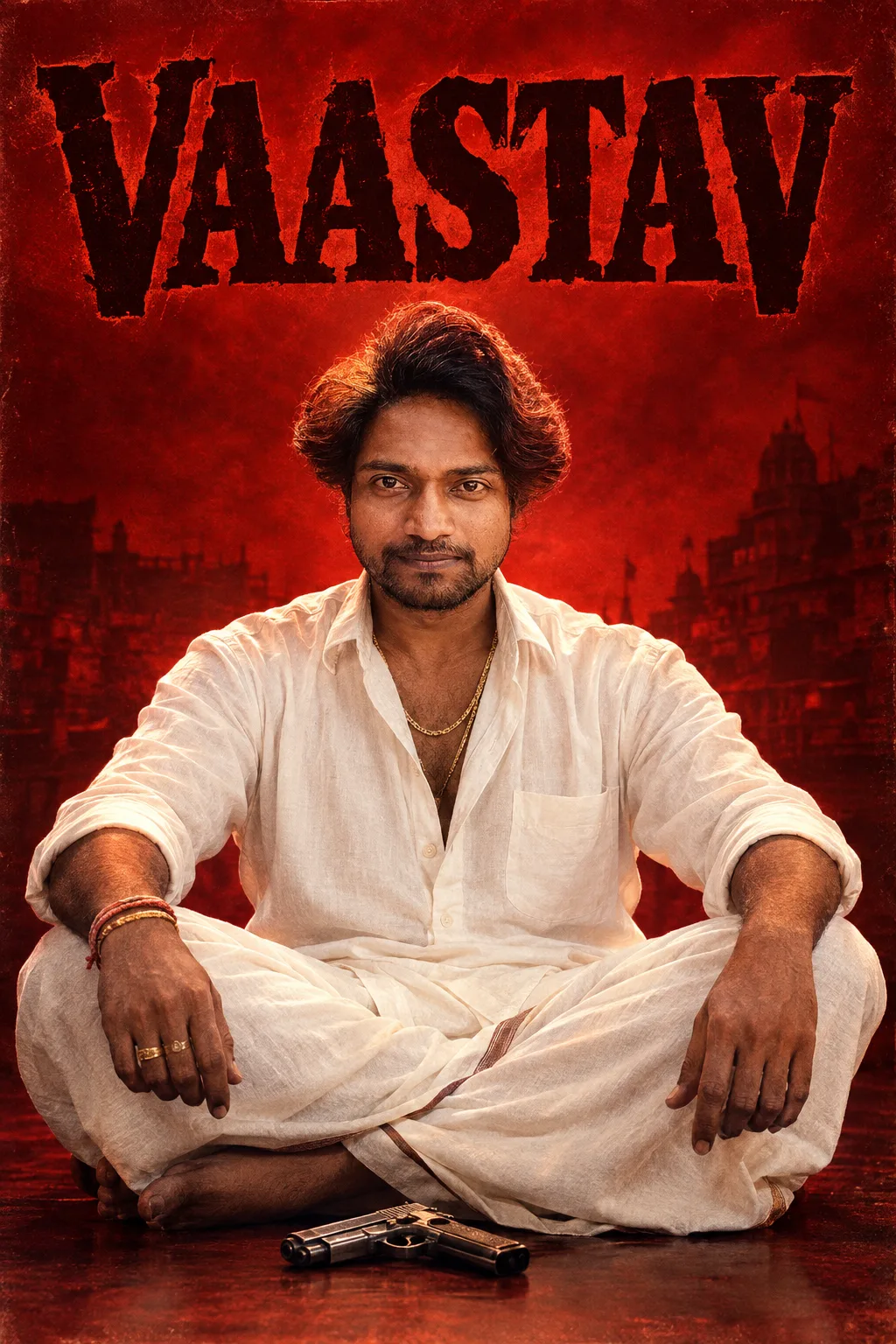
Example image provided with this prompt. This prompt has not been tested by our site.