ChatGPT
Golden Hour Journey
Written for ChatGPT. Results and reference-photo support may differ across models.
The complete prompt
Use the uploaded photo as the **only source of the primary subject’s identity** and use the reference image only as a visual blueprint for the scene, pose, expression, composition, styling, lighting, and environment. Preserve the uploaded person’s recognizable identity exactly: facial structure and proportions, face shape, forehead, eyebrows, natural eye shape, nose, lips, jawline, cheeks, chin, skin tone, natural skin texture, hairline, and distinctive facial characteristics. Do not beautify, redesign, age, de-age, masculinize, feminize, or otherwise reinterpret the person. Do not make the person resemble either person in the reference. Preserve the uploaded person’s gender and identity regardless of the reference subjects. Do not copy the uploaded photo’s original expression, gaze, head angle, or pose; identity comes from the uploaded photo, while all expression and body behavior come from the reference.
Recreate the reference as a photorealistic intimate candid photograph inside an older city commuter train/tram during warm late-afternoon or early-evening sunlight. The primary subject occupies the foreground, seated beside the open doorway/window area, with their upper body turned slightly toward the window and their face angled toward the passing city outside. Their posture is relaxed and natural: torso upright but slightly leaning toward the doorway, shoulders loose, one arm resting downward beside the body, the other arm naturally positioned near the lap/companion. Reproduce the reference’s exact seated body geometry, limb placement, shoulder orientation, torso angle, and relaxed posture as closely as possible while adapting anatomy naturally to the uploaded person.
The primary subject’s head is turned approximately three-quarter profile toward the left side of the frame, with the chin slightly lowered and the face illuminated by the window. Their eyes look outward toward the city rather than toward the camera, matching the reference’s distant sideways gaze. Reconstruct the reference expression precisely: calm, introspective, gentle and slightly wistful, with relaxed eyebrows, naturally open eyes, relaxed eyelids, closed or very subtly parted lips, and no exaggerated smile. The expression must feel candid and emotionally quiet rather than posed. Preserve the exact head rotation, neck position, eye direction, eyelid openness, eyebrow position, and mouth expression from the reference while keeping the uploaded person’s facial identity unmistakable.
Include a second companion seated immediately beside the primary subject, leaning their head affectionately against the primary subject’s shoulder/upper arm. The companion is a distinct fictional person and must not copy or identify the reference person. Reproduce the companion’s reference pose: body angled toward the primary subject, head tilted gently onto their shoulder, one arm extending across and resting naturally around the primary subject’s forearm/lap area. The companion looks slightly upward and toward the primary subject with a soft, affectionate, dreamy expression and relaxed eyes, subtle closed-mouth smile, and gentle emotional warmth. Their posture should communicate quiet closeness without exaggerated romantic posing.
Match the reference clothing closely in visual character: the primary subject wears a loose, lightweight vertically striped button-up shirt in muted cream, beige, gray, and dusty neutral tones, with an open relaxed collar and naturally wrinkled fabric. The companion wears a soft, flowing traditional South Asian-inspired outfit in a dusty blush/pink tone with delicate small floral motifs, lightweight draping fabric, and subtle ornamental earrings. Preserve realistic fabric folds, stitching, translucency, wrinkles, and natural drape. Do not alter the uploaded person’s identity to match the reference styling; clothing may change while their face remains faithful.
Recreate the train interior in detail: an aged cream/beige metal carriage with worn surfaces, vertical metal doorway poles, a large open doorway/window on the left, overhead luggage racks, an old circular ceiling fan near the upper-right, dark blue/gray trim, bench seating, and small signs or markings on the carriage wall. Include the handwritten-style romantic note on the rear wall as a background detail, but keep it naturally integrated and slightly soft rather than making text a focal point. Through the open doorway/window, show a dense urban city passing outside with distant buildings, railway infrastructure, tracks and horizontal motion elements. The outside city should be strongly backlit by warm sunlight, with a tall pale building visible in the hazy distance.
Composition: vertical portrait orientation, approximately 4:5 aspect ratio. Frame from roughly mid-thigh/hip level upward, with the primary subject occupying the center-left/central foreground and the companion filling the lower-right portion. Keep the doorway and bright exterior along the far left edge, creating a strong vertical architectural frame. The subjects should be close to the camera and dominate the image while the carriage continues into the background on the right. Preserve the reference’s asymmetric composition, negative space near the upper-left, and layered depth from doorway → subjects → carriage interior.
Camera perspective should resemble a handheld full-frame mirrorless/DSLR photograph taken from inside the carriage at approximately seated chest/eye level, moderately close to the subjects, using a natural portrait perspective around 50–65mm full-frame equivalent. Avoid wide-angle distortion. Keep faces and body proportions natural. Focus sharply on the primary subject’s face and nearby companion, with realistic gradual depth-of-field falloff into the train interior and city outside. Background details remain recognizable but softly blurred.
Lighting is essential: reproduce warm golden-hour sunlight entering strongly from the left through the open doorway/window, creating soft golden highlights along hair, cheeks, shoulders, clothing edges, and the metal doorway. Use natural directional sunlight with gentle warm rim light and realistic soft shadows across the faces. Interior areas should remain slightly darker and warmer, producing strong but believable contrast between the glowing exterior and shaded carriage. Preserve realistic skin tones beneath the warm illumination; do not apply an artificial orange filter. Include subtle reflected light from the train interior and believable exposure around the bright exterior.
Visual style: highly photorealistic cinematic lifestyle photography, authentic candid moment, natural skin texture, realistic pores and fine facial detail, individual hair strands, physically accurate fabric, subtle imperfections, realistic reflections on aged metal, nuanced shadows, natural color grading, soft atmospheric haze outside, gentle filmic contrast, and restrained cinematic warmth. Avoid glamour retouching, plastic skin, excessive HDR, oversharpening, artificial bokeh, exaggerated saturation, illustration, CGI appearance, or beauty-filter effects.
Most important hierarchy: 1) the uploaded photo determines WHO the primary subject is and must remain unmistakably recognizable; 2) the reference determines the primary subject’s expression, emotion, gaze direction, eye openness, mouth position, head rotation and head tilt; 3) the reference determines the complete body pose and companion interaction; 4) the reference determines clothing, train environment, composition, camera perspective and framing; 5) the reference determines lighting, color atmosphere, depth of field and photographic character. The final image should feel like the uploaded person naturally existed in this exact candid train moment, not like the reference person’s face was replaced or blended onto them.
Copy the complete prompt and use your own reference photos where requested.
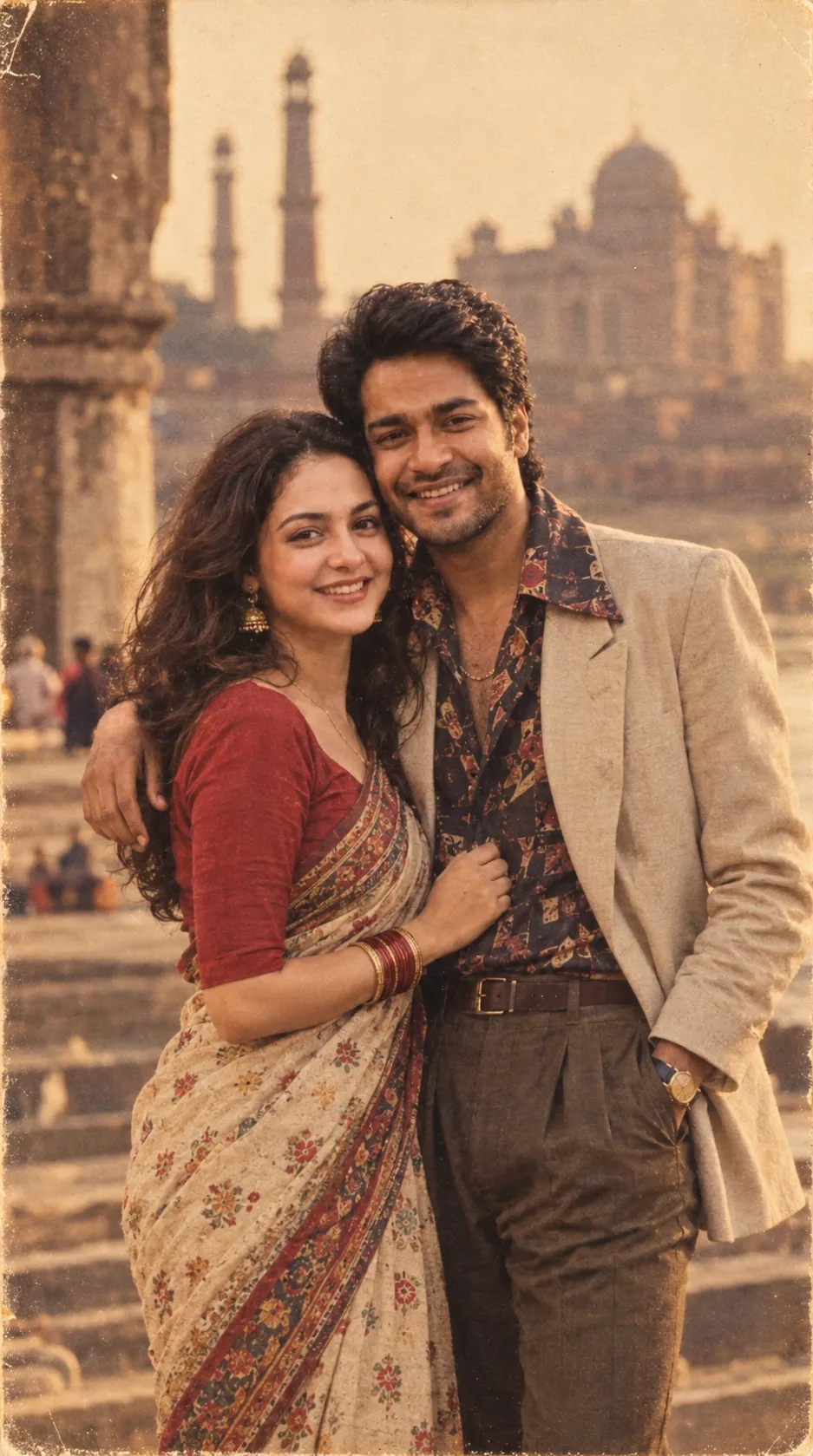
Example image provided with this prompt. This prompt has not been tested by our site.